



On December 8, 1861, Georges Méliès was born in Paris, France. He became one of the first French filmmakers, renowned for his creative development of motion pictures. Delighting in special effects, Méliès explored time-lapse photography and hand-painted color in films. His most famous movie, A Trip to the Moon (1902), features a scene where a spaceship lands on the eye of the man in the moon. It’s reasonable to say that prior to 2007 only a handful of children or adults in America would have heard of Méliès and his work. Although today he is not exactly a household name, many reading this column already have figured out the book up for discussion, Brian Selznick’s The Invention of Hugo Cabret. The filmmaker definitely gets star treatment in the new movie, Hugo, based on Brian’s book.
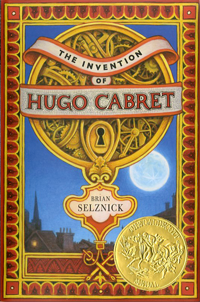
In a 534 page novel every bit as revolutionary as Méliès films, Selznick pays tribute to the French filmmaker as he takes six- to fourteen-year-old readers along on an adventure told half in text and half in pictures. The design of this book immediately catches the attention of readers. It is, in fact, one of the best designed volumes of the decade. Besides the cover, which displays the only color in the book, the story is told in a black-and-white format, one that resembles the motion pictures of the early 1900s. Our hero, twelve-year-old Hugo, orphan and thief, lives in the walls of a busy Paris train station at the turn of the twentieth century. Before Hugo’s father died, he had been working on an automaton, trying to get the robot to function; Hugo also becomes obsessed with making this mechanical man work. But one day when stealing toys from a shopkeeper at the station, Hugo gets caught. Ultimately this exchange brings our birthday boy, Georges Méliès, out of hiding. Even the subplots of this sprawling novel have subplots; and because so much of the story is told in art, every reader has a slightly different version of what happens in the book.
Although The Invention of Hugo Cabret has 534 pages, the text is frequently broken by picture sequences. Hence it seems easier to read than it looks. That has been one of the greatest advantages of this book. Even reluctant third and fourth grade readers find themselves swept along, many of them finishing a large book for the first time—one that can be proudly displayed to family and friends. “I read this book four times,” one youngster wrote. ”I was nine years old the first time I read it.”
I’ve seen these children, often holding two or three copies of this impressive tome, standing in lines for hours to get an autograph from their hero, Brian Selznick. In the past few years The Invention of Hugo Cabret and the novels ofRick Riordan have been our silver bullets when it comes to enticing children into reading.
Happy birthday, Georges; and thank you Brian. Throughout your career you have given children so many incredible books—but you endeared yourself to millions with The Invention of Hugo Cabret.
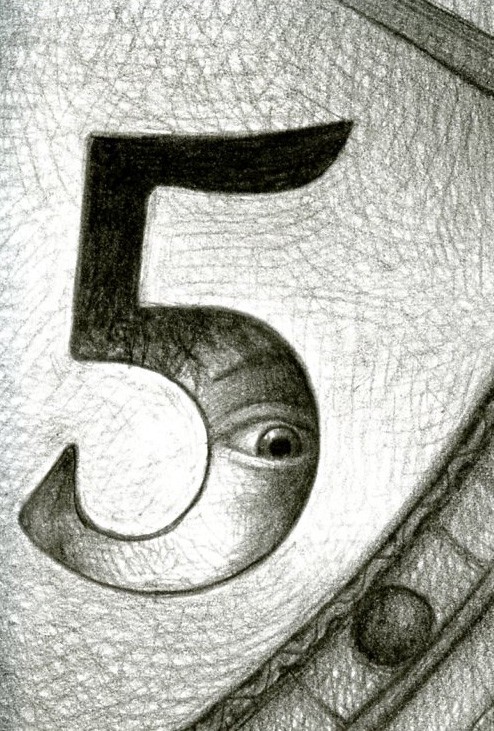
Here’s a section from The Invention of Hugo Cabret:
From his perch behind the clock, Hugo could see everything. He rubbed his fingers nervously against the small notebook in his pocket and told himself to be patient.
The old man in the toy booth was arguing with the girl. She was about Hugo’s age, and he often saw her go into the booth with a book under her arm and disappear behind the counter.
The old man looked agitated today. Had he figured out some of his toys were missing? Well, there was nothing to be done about that now.
Hugo needed the toys.