

Today marks the birthday of one of the greatest children’s book creators of the twentieth century, Margaret Wise Brown. Although she died suddenly of an embolism at the age of forty-two, Brown wrote more than one hundred books, including Runaway Bunny and her classic Goodnight Moon. Born in Brooklyn, New York, Brown grew up on Long Island and attended the Dana Hall School and Hollins College, where she was encouraged to write. The teacher-training program of Bank Street in New York would change her life.
Flourishing under the mentorship of Lucy Sprague Mitchell, founder of Bank Street, Brown began to study early childhood development and write stories for very young children. Mitchell believed that children under the age of six wanted stories that reflected the reality of their own lives. Brown embraced Mitchell’s ideals and crafted individual works of genius for babies, toddlers, and preliterate children.
For a period of time, Brown became an editor for William R. Scott, publishing books like Caps for Sale by Esphyr Slobodkina, Gertrude Stein’s The World is Round, and her own titles such as The Noisy Book. Eventually, with the publication of The Runaway Bunny in 1942, Brown began to write full time, penning one classic after another—The Color Kittens (1949), a Golden Book that deals with color theory, The Little Island (1946) [under the pseudonym of Golden MacDonald], and Mister Dog (1952).
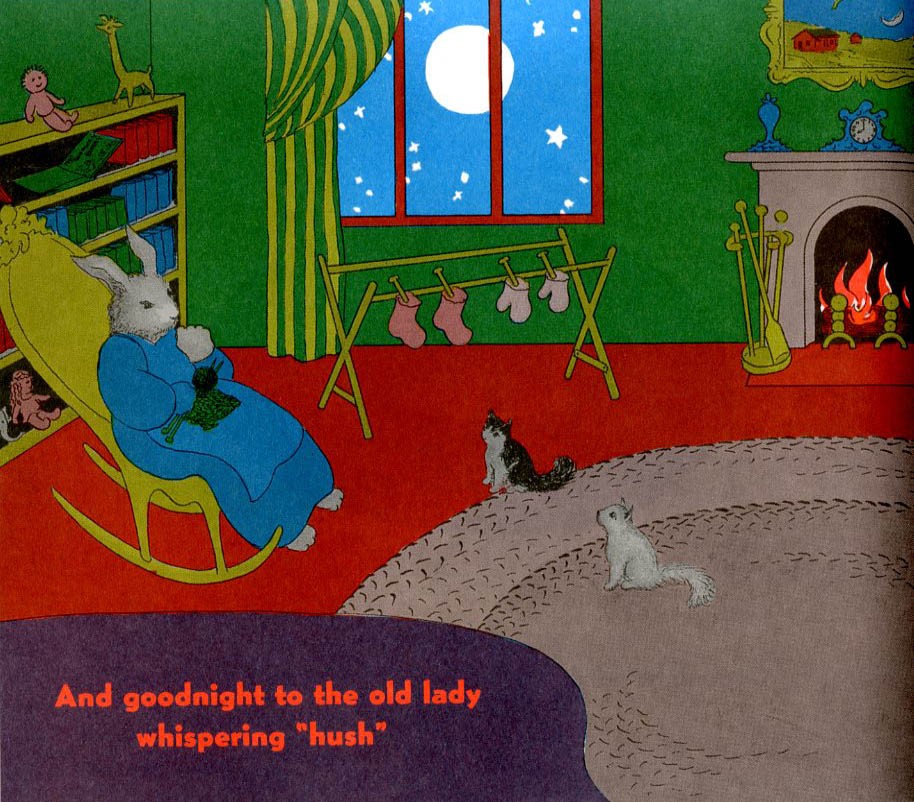
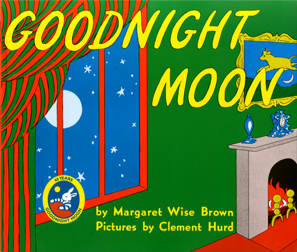
Today Brown is best remembered for a book that took almost twenty years to establish itself as a classic, Goodnight Moon. Upon awakening one morning in 1945, she wrote down the entire text of the book, telephoned her editor, Ursula Nordstrom, and read the text. Nordstrom accepted it immediately for publication. In a melodic, rhythmic text a young bunny says goodnight to all the objects in the room.
Brown waited for Clement Hurd to return from the Pacific, where he was fighting in World War II, to work his illustration magic. She had loved his art for Runaway Bunny. But when she saw the first draft of the art, Brown hated it. Hurd portrayed an old white grandmother sitting in the chair, with a young black boy in bed. Brown insisted the story had always been about bunnies, and she wanted bunnies! Nordstrom backed her.
The resulting book seemed a bit unexciting and overpriced for most customers. Critics found it sentimental. However, in the end children established it as a classic. A few months ago, I read Goodnight Moon, over and over and over, to my two-year-old grandniece Ella Silvey. She had no intention of going to sleep; she just wanted to hear the text one more time. As I kept rereading, I once again realized what a pleasure it is to say these words aloud. A timeless book, almost like a child’s evening prayers, Goodnight Moon has lulled millions of children to sleep over the decades.
So happy birthday Margaret Wise Brown. You taught us, and still teach us, how to communicate to the youngest children. Although you had only a decade to devote yourself to writing, in that short time you truly made a difference in the lives of children everywhere.
Here’s a page from Goodnight Moon: