



On May 27, 1818, Amelia Jenks was born in Homer, New York. She married an attorney named Dexter Bloomer, who encouraged her to write for his paper, the Seneca Falls Country Courier. Amelia became a strong voice for both temperance and women’s rights. She also had the good fortune of having a piece of clothing that she popularized named after her. Not everyone has a last name that can serve for what the person creates. I sometimes wonder, when I have nothing else to do, what might be called a “Silvey.” Possibly a hat that attaches itself to the wearer’s head and cannot be blown off?
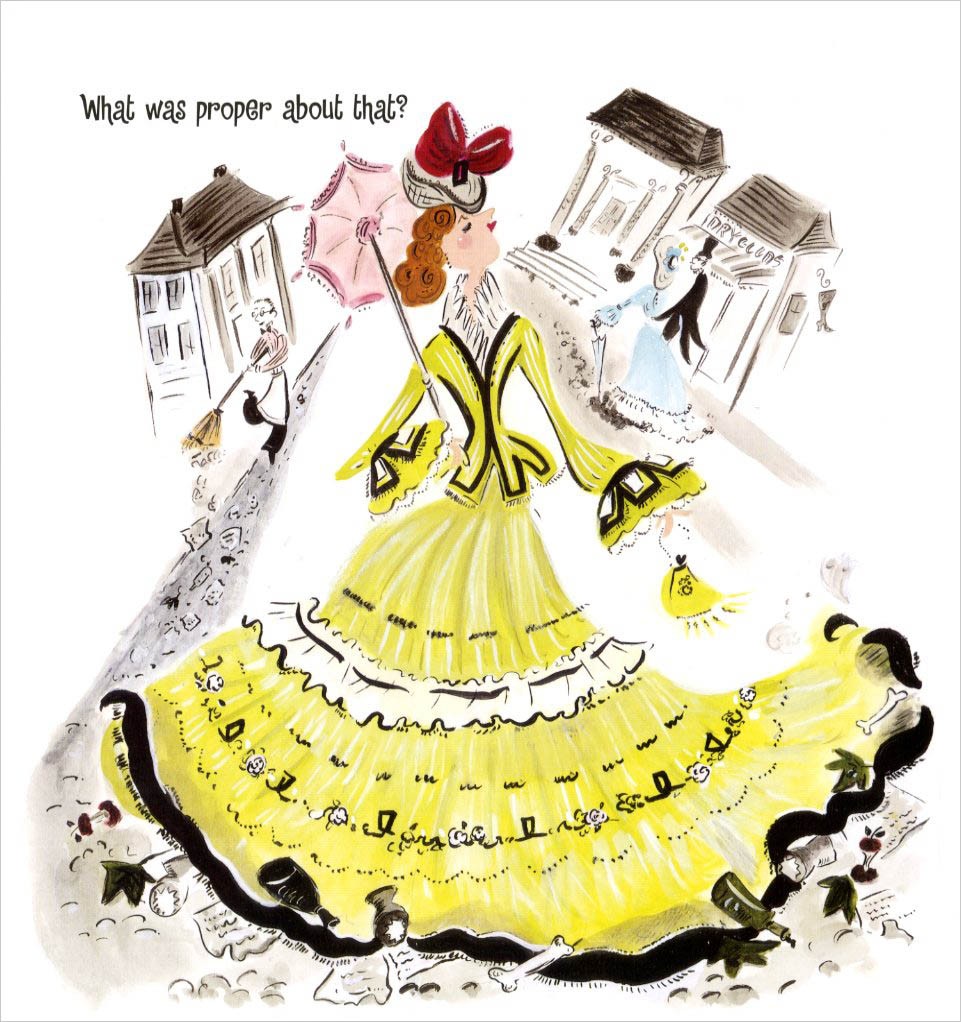
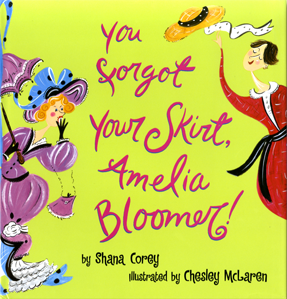
But I digress. Recently, Amelia has gotten renewed attention because of a book and a project inspired by her. The picture book, You Forgot Your Skirt, Amelia Bloomer! by Shana Corey, focuses on Amelia’s rebellious nature. Not a proper lady, Amelia thought the trappings of femininity silly—with the voluminous skirts that swept up trash and the corsets that made women faint. She believed that a woman should have a job and vote. Hence, Amelia became the first woman to own, operate, and edit a newspaper, The Lily. She used her bully pulpit to advocated against drinking and for women’s rights. When she spied Elizabeth Cady Stanton’s cousin Libby wearing a costume that was not a dress—but pantaloons with a skirt over them—Amelia made one, wore it, sold patterns to her readers, and used the power of the press to advocate for what became known as the “bloomer.” This style did go out of fashion but, fortunately, dress reform continued—and women and girls today can wear clothes to suit their active lifestyles.
Since 2002, the Amelia Bloomer Project—administered by the Feminist Task Force of the American Library Association’s Social Responsibilities Round Table—has been selecting books notable for their feminist content, quality writing, and appeal to young readers. In 2010, the Amelia Bloomer List included fifty-four books—a notable year in the task force’s estimation, because of the “Hilary” effect. For more information and book suggestions, you can visit their website.
So thank you Amelia Bloomer for passion and spirited advocacy of comfortable clothes. And thank all of those on the Bloomer Project for finding books that show women taking action and fighting for their rights.
Now I just need to work on that “Silvey.”
Here’s a page from You Forgot Your Skirt, Amelia Bloomer!