Daily children’s book recommendations and events from Anita Silvey.
Discover the stories behind the children’s book classics . . .
The new books on their way to becoming classics . . .
And events from the world of children’s books—and the world at large.
Find a Book!
Search the archives for recommendations by age group, book type, subject, date, and more.

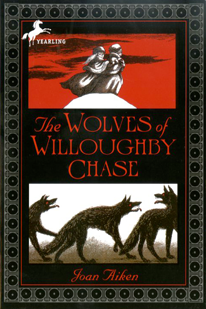
On September 4, Joan Aiken (1924-2004) was born in Rye, East Sussex, England, the newest member of a family of authors. Her father, Pulitzer Prize–winning poet Conrad Aiken, was just one of the creative people in Joan’s life. Homeschooled by her mother, Joan Aiken decided at age five that she, too, wanted to be a writer. After working for the BBC and United Nations Information Office, she was able, after the publication of her first novel in 1962, to become a full-time author, sometimes producing two or three books a year.
When critics talk about comparisons to J. K. Rowling, they often mention Dianna Wynne Jones or Ursula K. Le Guin, because they created schools for wizards long before Hogwarts. But I have always thought that Rowling’s most obvious kindred spirit, in terms of style, approach, and inventiveness, is Joan Aiken. Although Aiken’s books are beautifully written and executed with a vocabulary that would impress any adult, they are plot and character driven and contain one exciting scene after another. Don’t pick up one of her books late at night if you need to get sleep—she keeps the story going nonstop until the end.
Originally entitled “Bonnie Green,” after the main character, The Wolves of Willoughby Chase, like the rest of the books that followed in the Wolves Chronicles, takes place in an alternate nineteenth-century England during the reign of James III. Aiken actually makes use of some real historical material, but the books are chock full of wild exaggerations, melodrama, and improbable events. They read as if they might have been written by Charles Dickens.
The owners of Willoughby Manor, the Greens, set off for a restorative vacation, and leave their daughter Bonnie, plucky, resourceful, and outspoken, with a new governess. Bonnie’s cousin Sylvia arrives from London to keep Bonnie from being too lonely. This might seem like an innocent enough beginning of a story, but things quickly grow menacing for the two girls. Bands of ferocious wolves roam the countryside, ready to tear apart anyone they capture, and Sylvia narrowly escapes them before she arrives at the manor. And the new governess isn’t quite what the Greens envisioned—she fires the servants, burns wills and valuable documents, and locks the children in a closet without food. Aiken once said that her books “are concerned with children tackling the problems of an adult world.” In all of them good always triumphs over evil.
For many years when I was editor of Horn Book, I brought Aiken books as gifts for parties or overnight visits for friends who had children from ten to fourteen. Today young women in their twenties and thirties, many of them with children themselves, come up to me and say, “You gave me the Joan Aiken books!” A nice way to be remembered.
Here’s a passage from The Wolves of Willoughby Chase:
As if in contradiction of his words a sad and sinister howling now arose beyond the windows, and Sylvia, pressing her face against the dark pane, saw that they were passing through a thickly wooded region where snow lay deep on the ground. Across this white carpet she could just discern a ragged multitude pouring, out of which arose, from time to time, this terrible cry. She was almost petrified with fear and sat clutching Annabelle in a cold and trembling hand. At length she summoned up strength to whisper:
“Why don’t we go on?”
“Oh, I expect there are too many of ’em on the line ahead,” the man answered carelessly. Can’t just push through them, you see—the engine would be derailed in no time, and then we should be in a bad way. No, I expect we’ll have to wait here till daylight now—the wolves get scared then, you know, and make for home. All that matters is that the driver shan’t get eaten in the meantime—he’ll keep ’em off by throwing lumps of coal at them, I dare say.”
Also recommended:
- All of the Wolves Chronicles by Joan Aiken
Additional Information
A few other events for
- It’s the birthdate of Syd Hoff (1912–2004), author of Danny and the Dinosaur.
- It’s also the birthday of cartoon character Beetle Bailey, created by Mort Walker, and the city of Los Angeles (founded in 1781).
- Ten-year-old Barney Flaherty is hired as the first newsboy by the New York Sun on this day in 1833. Hence, it’s Newspaper Carrier Day! Read Henry and the Paper Route by Beverly Cleary and Paperboy by Dav Pilkey.
- In 1888, George Eastman trademarks Kodak and patents his roll film camera in 1888. Read It’s a Snap!: George Eastman’s First Photo by Monica Kulling, illustrated by Bill Slavin.
- Beatrix Potter tells a tale of Peter Rabbit in a picture and story letter to five-year-old Noel Moore in 1893.