Today we celebrate the birthday of one of the most original creators of children’s books, Lothar Meggendorfer, born in Munich in 1847. Meggendorfer did not want the images of a book to lie flat on the page—he thought they should move. Decades before motion pictures or interactive computer graphics, he experimented with paper engineering to create exquisite pop-up books. Rather than reproducing the crude prototype of the day, Meggendorfer created pages that contained many movements, made possible by rivets and levers. His early books were hand-colored, although later works relied on the process of chromolithography. Given the age and fragility of these items, they remain prized and rare. Both the University of North Texas and the University of Virginia house Meggendorfers; the only one I have ever seen myself resides in the Mazza Museum at the University of Findlay in Ohio, one of many fabulous offerings there. Today a prize for paper engineering, the Lothar Meggendorfer Prize, is given annually in his name .
Although always valued in Europe, particularly Germany, pop-ups remained rare in the United States until the end of the twentieth century. The most accomplished artist in the genre, Robert Sabuda, began creating pop-up books in 1994 with The Christmas Alphabet and has gone on to publish one title after another that both delights its young viewers and amazes adults.
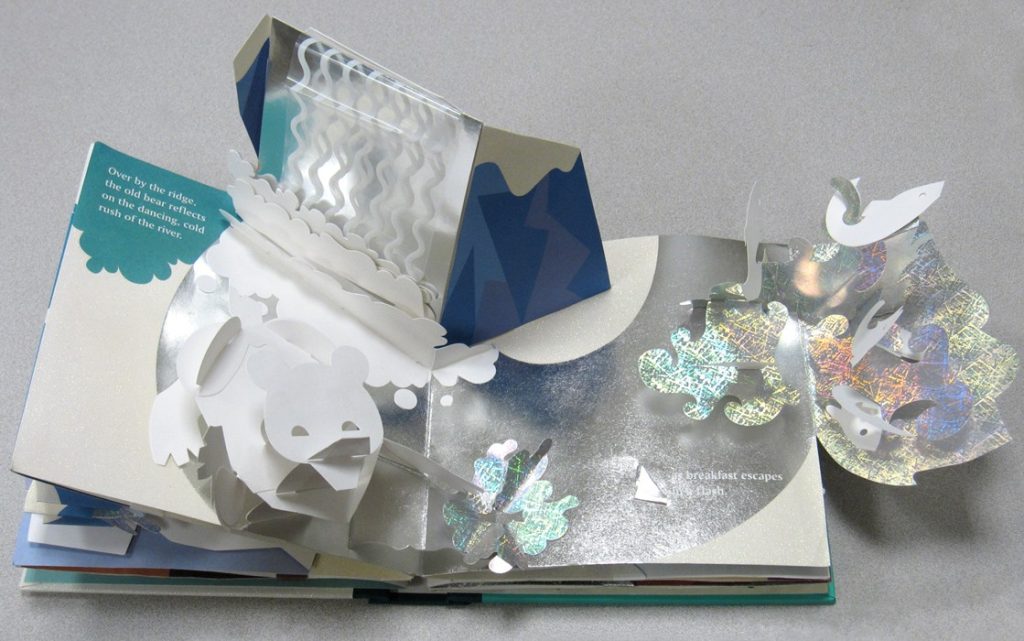
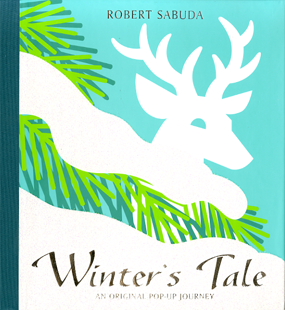
If you want to purchase a book appropriate for the winter season, pick up Sabuda’s Winter’s Tale. I suggest buying your own copy because the fragility of pop-up books often makes them difficult for libraries to circulate. In Winter’s Tale, readers see, in 3-D pop-up versions, several creatures—owl, bears, mice, foxes, rabbits, deer, and moose—responding to the change of season. The final double-page spread shows the natural world in all its wonder, with a tiny house tucked into the woods.
Children and adults naturally wonder how Sabuda manages to get all this paper to move. His website contains valuable information about both his process and paper engineering in general, providing a template, so that amateur paper engineers can try their hand at the craft. He also explains his fascination with pop-up books, a passion he shares with our birthday boy Lothar.
Happy 164th birthday Lothar Meggendorfer. Thank you, and Robert Sabuda, for thinking outside of the box when it comes to books for children.
Here’s a spread from Winter’s Tale: