Daily children’s book recommendations and events from Anita Silvey.
Discover the stories behind the children’s book classics . . .
The new books on their way to becoming classics . . .
And events from the world of children’s books—and the world at large.
Find a Book!
Search the archives for recommendations by age group, book type, subject, date, and more.
Many states observe Archaeological Month during September, with activities for children to think about this profession as a career. Even to me as an adult, the lure of going on an archaeological dig remains one of my unfulfilled fantasies.
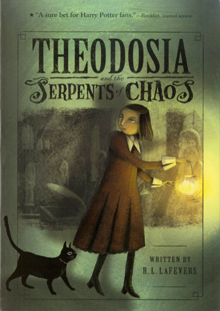
The book of the day R. L. LaFevers’s Theodosia and the Serpents of Chaos definitely flames those dreams. In a story that begins on December 17, 1906, eleven-year-old Theodosia introduces readers to her rather unusual living arrangements. Her father oversees the Museum of Legends and Antiquities, and her mother frequently travels by herself to Egypt to bring back artifacts for this London establishment. Although there is some tension about taking Egypt’s treasures out of the country, the British and Germans have few qualms about this—quite accurate historically.
But although Theodosia shares her parents’ passion for ancient objects, she has a gift they lack. She can tell when an object contains an evil curse—and she has perfected ways to remove them. Because her parents are so absorbed in their work, they have not made arrangements for Theodosia to attend school or be managed by a governess. She lives most of the time in the museum and has found a cozy sarcophagus to sleep in.
When her mother returns from her latest archaeological dig, she brings a rare object called “The Heart of Egypt,” which is an amulet from an ancient tomb. And because it contains a curse far more devastating than any other, Theodosia actually gets swept up in a plot to return it to its rightful owners—before Britain is destroyed. That quest ultimately leads to her first trip to Cairo and her first chance to actually find some archaeological treasures. That is if she can get out alive—for by now a band of very evil characters trace her every move.
A plucky, clever heroine, fascinating material, and page-turning plot all help make Theodosia and the Serpents of Chaos delightful for the ten to fourteen set. Even if it doesn’t convince them to become archaeologists, it will make them believe that reading can be fun and exciting and entertaining.
Here’s a passage from Theodosia and the Serpents of Chaos:
Not that anyone would take the word of an eleven-year-old girl against that of the Second Assistant Curator—even if that girl just happens to be the daughter of the Head Curator of the museum and is rather cleverer than most (or so I’ve been told; oddly, I don’t think they meant it as a compliment). As far as I can tell, it doesn’t make any difference to adults how clever children are. They always stick together. Unless you are sick or dying or mortally wounded they will always side with the other adult.
I don’t trust Clive Fagenbush.
How can you trust a person who has eyebrows as thick and black as hairbrushes and smells of boiled cabbage and pickled onions? Besides, I’m beginning to suspect he’s up to something. What’s worse, I think he suspects I’m up to something. Which I usually am.
Other books for this day
Also recommended:
- Theodosia and the Staff of Osiris and other Theodosia books by R. L. LaFevers
Additional Information
A few other events for
- Birthday greetings to Kimberly Willis Holt (My Louisiana Sky, When Zachary Beaver Came to Town) and Sharon Darrow (Trash).
- It’s the birth date of Aileen Fisher (1906–2002), The Story of Easter, and Phyllis Whitney (1903–2008) who wrote children’s mysteries from the forties through the seventies. She lived to age 104!
- Happy birthday to California, which became the 31st U.S. state in 1850.
- Chrysanthemum Day (Kiku no Sekku) started in Japan in 910 A.D. Read The Sign of the Chrysanthemum by Katherine Paterson.
- It’s Wonderful Weirdos Day! The folks in Austin, Texas, created this holiday to celebrate wacky and eclectic people. Try Weirdos from Another Planet, a Calvin and Hobbes book by Bill Watterson, Weird Parents by Audrey Wood, or Weird Friends: Unlikely Allies in the Animal Kingdom by Jose Aruego and Ariane Dewey.
- Celebrate Teddy Bear Day by rereading Corduroy by Don Freeman.