


On July 13, 1864, John Jacob Astor IV was born in Rhinebeck, New York. He would become the richest man in the world—a land developer, inventor, and even author of a science fiction novel. Today Astor is best remembered as one of the victims of the Titanic.
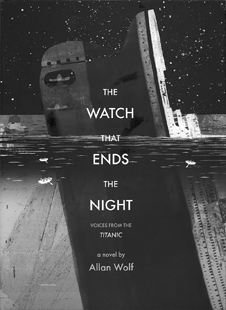
He serves as one of the multiple narrators of today’s book The Watch that Ends the Night by Allan Wolf. This amazing re-creation of the journey of the Titanic provides ample opportunity for the rich and poor—even the ship’s rats—to tell their version of the story. When I first read this book, I thought it could be best used in high school. But I was happy to learn from my good friend Betty Carter that it has been extremely popular in Texas middle schools, grades six through eight.
In a book of more than five hundred pages, Wolf uses free verse to give voice to two dozen members of the crew and passengers to relate the fateful story of the Titanic. He begins this saga with John Snow, an undertaker, who must remove all the dead bodies from around the wreckage of the ship, and he gives the final voice to one of the ship’s rats. In between, he moves masterfully from one person to another, weaving each saga in and out of the events that led to the demise of this luxury ship. Even the fatal iceberg has its say in Wolf’s account of events. Children like Frankie Goldsmith, the builder Bruce Ismay, a baker, immigrants, a confidence man, the “unsinkable” Molly Brown all present their side of the story. But the events have been related in appropriate chronological order—from the ship’s setting out, to the final morning. Readers move between decks; they observe the preparations for keeping more than two thousand people fed and satisfied on this ocean voyage. By the time the story turns to its inevitable tragic outcome, readers have learned not only history but they have also gotten to know these passengers. In the end, Wolf provides notes about their fates.
I’ve long admired Allan Wolf’s poetic novels but think he has never been better than in The Watch that Ends the Night. Although I know how the story ends, he still had me reading nonstop—I could not put this book down. I suppose that I always long for a different ending. This is a perfect book to pair with a new title by Deborah Hopkinson, Titanic: Voices from the Disaster, particularly for those who like to bring fiction and nonfiction together. High summer makes a great time to revisit the story of the Titanic, far away from snow or icebergs.
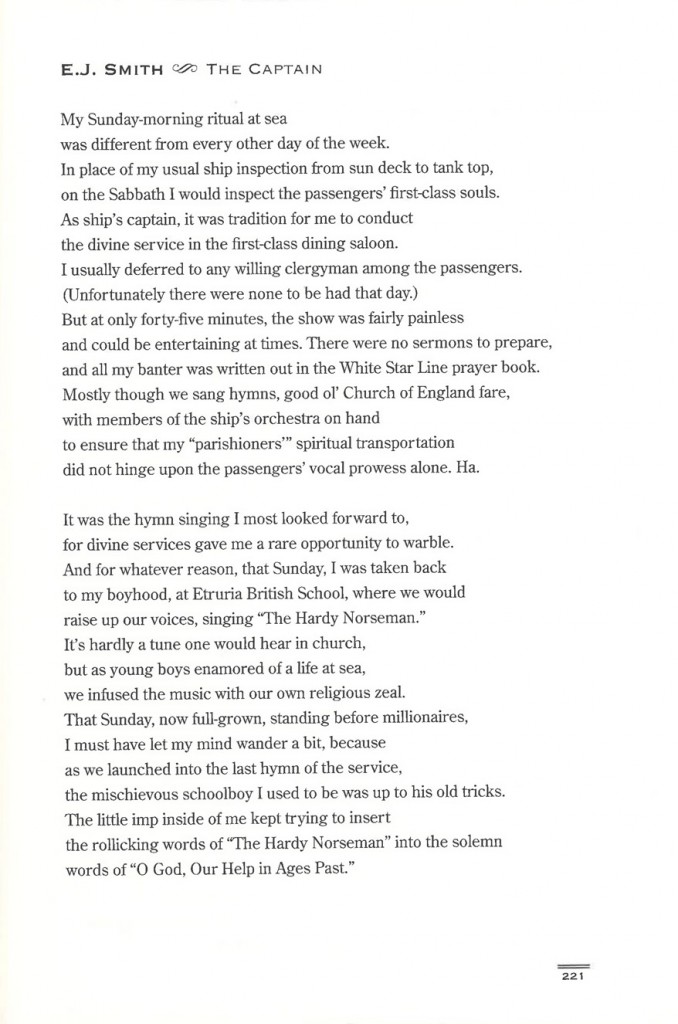
Here’s a page from The Watch that Ends the Night: