Daily children’s book recommendations and events from Anita Silvey.
Discover the stories behind the children’s book classics . . .
The new books on their way to becoming classics . . .
And events from the world of children’s books—and the world at large.
Find a Book!
Search the archives for recommendations by age group, book type, subject, date, and more.

The Phantom Tollbooth
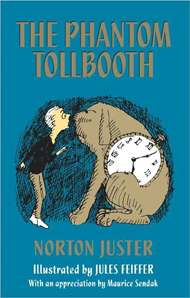
Today marks the birthday of Norton Juster, a man who should be named the patron saint of all who put pen to paper. One of the things that all writers do, on almost a daily basis, is avoid writing. If most of us put as much energy into writing as we put into not writing, the world would simply be flooded with books.
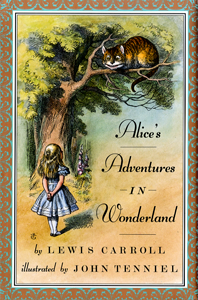
Creative procrastination can sometimes lead to great things—that is what writers constantly tell themselves. Our birthday guru proved this point several decades ago. An architect by trade, Norton Juster received a Ford Foundation grant to write about how people experience cities. To avoid work on this project, he began spilling out another tale about a very bored boy, Milo, who travels in an electric car to the Kingdom of Wisdom. In this land, with its tension between words and numbers, Milo encounters an array of fascinating characters: giant insects (Humbug and the Spelling Bee) and a watchdog, Tock, whose body contains a large alarm clock. Even the minor characters in this book have names that can be savored: Duke of Definition, Minister of Meaning, Earl of Essence, Count of Connotation, and Undersecretary of Understanding. In this story that might remind readers of Lewis Carroll’s Alice’s Adventures in Wonderland, Milo attempts to rescue the twin sisters Rhyme and Reason and goes from one fantastic region of this madcap world to another.
As luck would have it, Juster lived in the same apartment building with cartoonist Jules Feiffer in Brooklyn Heights, New York. So as the book was created, Feiffer made drawings of these incredible creatures. The story became a kind of competition between the two creators; the author attempted to describe things that would be difficult for Feiffer to draw. The whole exercise became a game, inventive, free-flowing—a fabulous example of thinking and writing out of the box.
Evidentially, when the Ford Foundation received a copy of the manuscript, they did not respond. But children have absolutely adored The Phantom Tollbooth since in appeared in 1961. So, happy 82nd birthday Norton Juster. You remind all of us that some of our best work comes when we are avoiding what we think we should be doing.
Here’s a passage from The Phantom Tollbooth:
The little car started to go faster and faster as Milo’s brain whirled with activity, and down the road they went. In a few moments they were out of the Doldrums and back on the main highway. All the colors had returned to their original brightness, and as they raced along the road Milo continued to think of all sorts of things; of the many detours and wrong turns that were so easy to take, of how fine it was to be moving along, and, most of all, of how much could be accomplished with just a little thought. And the dog, his nose in the wind, just sat back, watchfully ticking.
“You must excuse my gruff conduct,” the watchdog said, after they’d been driving for some time, “but you see it’s traditional for watchdogs to be ferocious.”
Other books for this day
Also recommended:
- The Dot and the Line: A Romance in Lower Mathematics by Norton Juster
- The Odious Ogre by Norton Juster, illustrated by Jules Feiffer
- The Hello, Goodbye Window by Norton Juster, illustrated by Chris Raschka
Additional Information
A few other events for
- Happy birthday William Loren Katz (Black Women of the Old West), Helen Oxenbury (We’re Going on a Bear Hunt), and Michael Emberley (It’s Perfectly Normal).
- It’s the birth date of Paul Galdone (1914-1986), The Three Billy Goats Gruff.
- Martha Washington (1731-1802), the first First Lady of the United States, was born on this day. Read The Escape of Oney Judge: Martha Washington’s Slave Finds Freedom by Emily Arnold McCully.