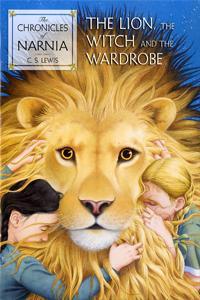

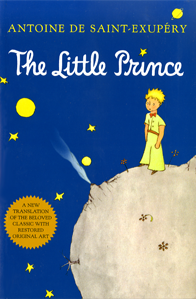
On April 6, 1943, one of the most unusual offerings in the children’s book cannon was published. Whether it was a book for adults or children or more appropriately “all ages” would become part of the ongoing debate about The Little Prince. Certainly some of the early reviewers like P. L. Travers and Anne Carroll Moore of the New York Public Library believed children could benefit from reading it. But with 80 million copies in print and translations into more than 210 languages, Antoinie de St. Exupery’s classic has definitely engrossed readers of all ages and became one of the fifty bestselling books of all times.
One of the most eccentric characters ever to appear in a book, the Little Prince from planet B-612, encounters the narrator of the story, a stranded aviator in the Sahara Desert. While the pilot works to repair his engine before he runs out of water, the prince describes his journey from planet to planet, the rose he left behind, and what he has learned about relationships and life. Containing a mesmerizing story with a great deal of philosophy, the book ends with the death of the space traveler — however, his body vanishes.
French aviator Antoine de Saint-Exupery was living on Long Island while he wrote his masterpiece. Several stories exist about the beginnings of the book. The version I’ve always liked the best claims that Saint-Exupery, while dining with his publisher Eugene Reynal, sketched out on the tablecloth a cast of invented characters, including a little boy with wings. Either Eugene or his wife Elizabeth suggested that the author write a fairy story that could be published at Christmas.
The book turned out to be a good deal more than a fairy story. To create The Little Prince, Saint-Exupery relied on some of his own experiences, such as his plane crashing in the Libyan desert. His wife Consuelo claimed to be the inspiration for the rose in the story. Certainly some of the Little Prince’s statements about his beloved rose describe the tumultuous marriage of Consuelo and Antoine. In this amazing book, Saint-Exupery took his own experience and transformed it into a statement about the universe and life.
Written in French, the book was first released in English in the United States, with the French version coming later. In 2000 poet Richard Howard published a new translation, correcting some of the errors of the first American edition and providing a fresh interpretation of this classic. The book has influenced thousands with its wisdom and whimsy. Artist Peter Sis wrote in Everything I Need to Know I Learned from a Children’s Book, “The Little Prince showed me that very individual and personal feelings could be communicated in a story. But it also showed me that an artist could incorporate these feelings and emotions in the drawings. It…guided me to a career as an illustrator.” And Fred Rogers of Mr. Rogers Neighborhood kept a quote from the book on his wall: “L’essential est invisible pour les yeux.” (“What is essential is invisible to the eye.”)
Slightly over a year after the publication of The Little Prince, Antoine de Saint-Exupery died in an airplane crash, while serving as a pilot for the Free French Forces in World War II. But he still lives on for his readers in the guise of his most famous characters, the Little Prince from planet B-612.
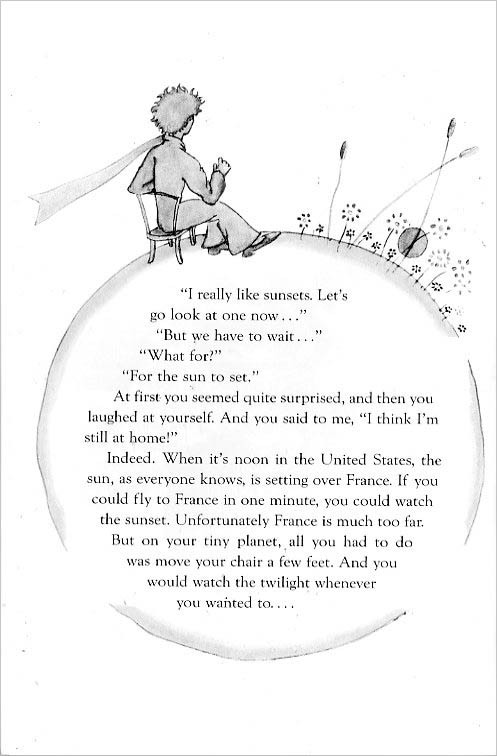
Here’s a page from The Little Prince: