
October happens to be Fire Pup Month. But even old dogs can learn new tricks—and today I will be writing about a cat, not a dog!
This year I’ve been meeting with a group of children’s book experts and enthusiasts to choose a small library of the best children’s books. Through this project I have gained an appreciation for authors of books for beginning readers (like the I Can Read series) who can tell a story that children want to go back to again and again. Although a great number of these titles have been published over the years, few have stood the test of time.
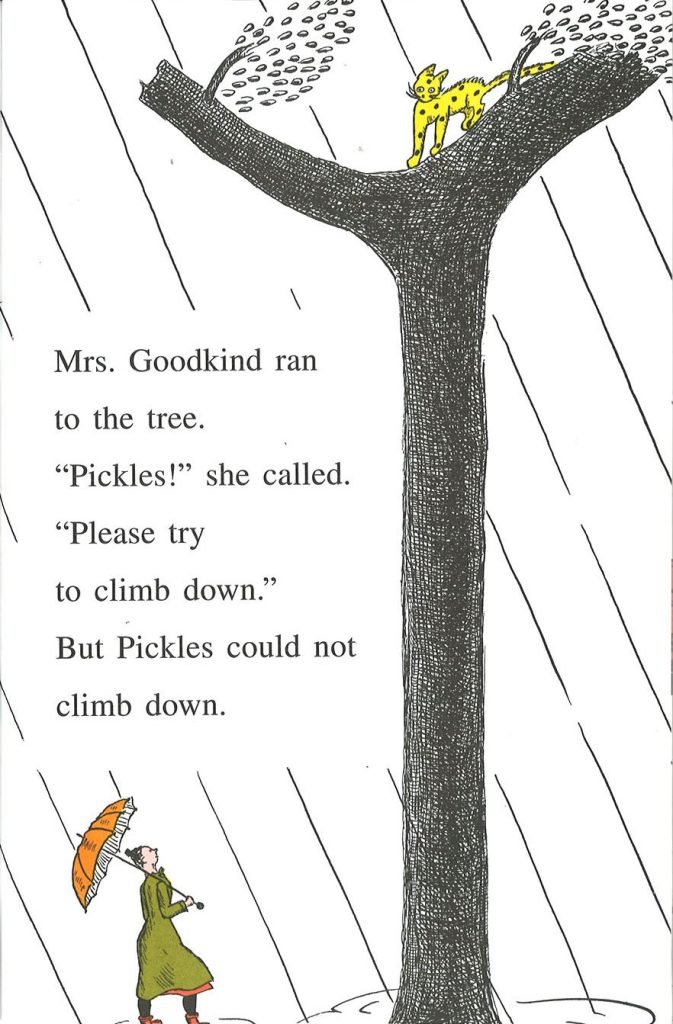
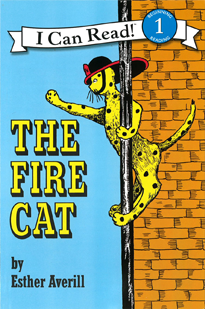
So I am enthusiastic for the book of the day, Esther Averill’s The Fire Cat. First published in 1960, and a book whose fifty-year anniversary went largely unnoticed, The Fire Cat introduces us to Pickles, a yellow cat with black spots. Looking like a feline Dalmatian, Pickles experiences a misspent youth. He chases other cats into trees and drives Mrs. Goodkind to despair. Like her name suggests, she truly wants to help him, and eventually, she calls the fire brigade to rescue him from a tree.
The fireman takes Pickles to live in the firehouse. From then on Pickles’s life takes a dramatic change for the better. He learns to slide down a fire pole, go out on missions, and even gets designated a Fire Cat. Now wearing his fire helmet, Pickles makes up for his old bad behavior and helps a young cat get down from a tree. Although the book has been divided into three chapters, in sixty-four pages The Fire Cat contains an entire story, with a beginning, middle, and very satisfying end. The text has been enlivened with animated illustrations of Pickles—either chasing cats or in the firehouse. Combining two favorite subjects of children—cats and trucks—and filled with action, adventure, and humor, The Fire Cat has been one of the favorite first books for children for more than fifty years.
The Fire Cat makes me aware of how desperately we need great authors to create books for the children who have reached the stage when they can finally say: “I can read. I can read. I can read it by myself.”
Here’s a page from The Fire Cat: