

On July 11, 1899, Elwyn Brooks White, known to his friends as Andy and the literary world as E. B., was born in Mount Vernon, New York. He would eventually become a Maine man, where he lived with his wife Katharine.
White published his first article in The New Yorker in 1925 and continued to write witty and beautifully crafted pieces for the magazine for six decades. With James Thurber he published Is Sex Necessary? He also updated The Elements of Style by William Strunk—a book now commonly called Strunk and White.
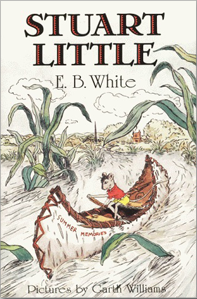
As brilliant an adult writer as he was, White became even more renowned when he turned to writing novels for children. In October of 1945 his first effort, Stuart Little—a droll story about a small mouse born to a family living in Manhattan—was published by Harper and Brothers. White had begun Stuart Little in the twenties, planning to share his mouse stories with family members, and eventually expanded his ideas into a novel. Although Stuart Little did receive some favorable reviews—the venerable Horn Book Magazine said it was “full of wit and wisdom and amusement”—other children’s book critics were not so amused. Anne Carroll Moore, the New York Public Library’s fierce defender of the proper content for novels for children ages ten and up, read the book before it appeared. She sent no less than a fourteen-page handwritten letter to Katharine White, insisting that the book was “non-affirmative, inconclusive, unfit for children” and would harm White’s reputation. She particularly objected to a mouse child having human parents. One of White’s New Yorker colleagues suggested that if he had he changed one single word—if Stuart had “arrived” in the family rather than have been “born” into it—the ruckus over his parentage might never have happened. Certainly, the cocreator of Strunk and White could appreciate the power of a single word.
Children, however, found the book hilarious. In this episodic and picaresque adventure, a two-inch-tall hero, who “looks very much like a mouse,” engages in a series of adventures—loosening stuck piano keys, fetching a ring from a drain, and getting rolled up in a window shade. I find that many adults who read this book as a child particularly remember Stuart’s magical ride on a sailboat in Central Park. Eventually, Stuart takes up a quest to rescue a beautiful bird named Margalo.
White would turn his hand to only two other children’s novels: The Trumpet of the Swan and Charlotte’s Web. For anyone hunting for new information about White, Michael Sims in The Story of Charlotte’s Web: E. B. White’s Eccentric Life in Nature and the Birth of an American Classic. has taken a fresh approach to White’s work, showing how the author’s life shaped his writing. It provides fascinating insights for all White readers.
White’s novels provide the best read-aloud experiences any family or any classroom can have. His books have garnered an enthusiastic audience of readers from eight to one hundred. Happy birthday, E. B. White. Thank you for ignoring your critics and persevering as a writer of books for children.
Here’s a passage from Stuart Little:
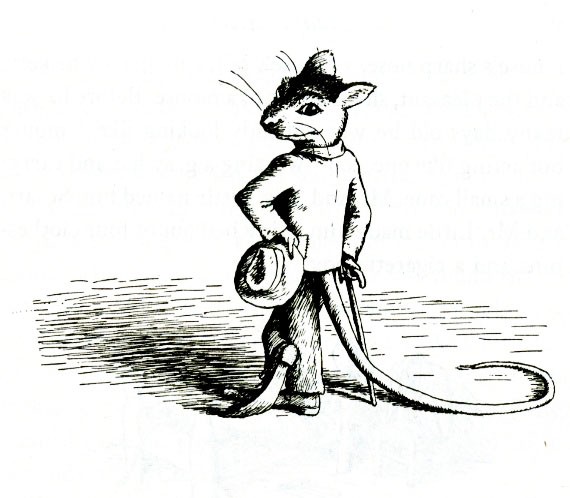
When Mrs. Frederick C. Little’s second son arrived, everybody noticed that he was not much bigger than a mouse. The truth of the matter was, the baby looked very much like a mouse in every way. He was only about two inches high; and he had a mouse’s sharp nose, a mouse’s tail, a mouse’s whiskers, and the pleasant, shy manner of a mouse. Before he was many days old he was not only looking like a mouse but acting like one, too—wearing a gray hat and carrying a small cane. Mr. and Mrs. Little named him Stuart, and Mr. Little made him a tiny bed out of four clothespins and a cigarette box.