


Today illustrator Etienne Delessert celebrates his birthday—he has been creating children’s books for more than fifty years. When I was a young critic in the 1970s, the avant guard of illustration consisted of Maurice Sendak (Where the Wild Things Are), Tomi Ungerer (No Kiss for Mother), Edward Gorey (The Shrinking of Treehorn), and Etienne Delessert, who had moved from Paris to the United States in 1965. Of this group Sendak became an icon, the grandfather of the American picture book; Ungerer won the Hans Christian Andersen award, and Gorey became a household name. But while Etienne’s two books for the innovative American publisher Harlin Quist, Story Number 1 and Story Number 2, pushed the boundaries of how sophisticated a picture book could be, Etienne remains avant guard even to this day and is uncompromising in his approach to providing children with graphic and exciting visual art. His more than eighty books have sold millions of copies worldwide.
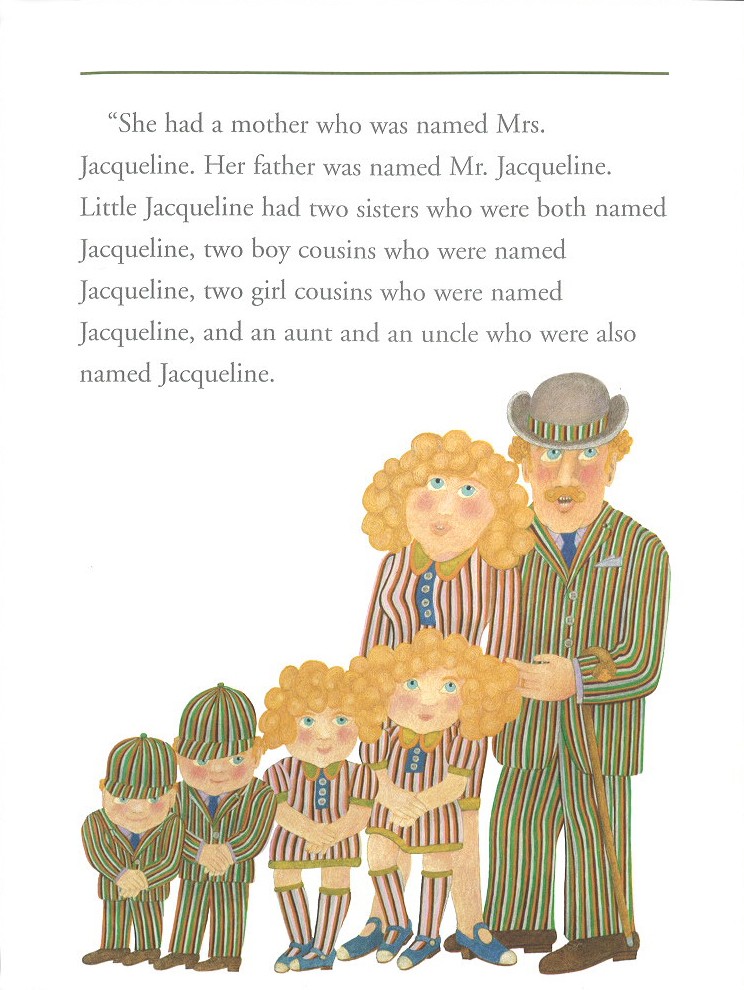
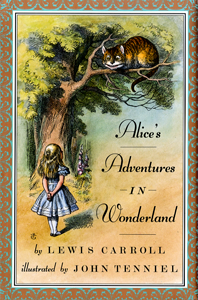
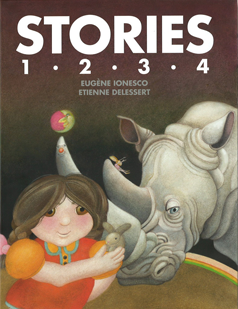
Fortunately for those who love his work, or anyone who has missed him, McSweeney’s children’s imprint, McMullens, published Stories 1, 2, 3, 4 in 2012, with text by Theatre of the Absurd writer Eugène Ionesco. Because McSweeney’s McMullens always pays careful attention to production and art, Etienne’s illustrations have been reproduced with all their subtleties. As he combines the fantastic and the familiar, he creates the world of Josette, who is thirty-three months old and whose father relates stories to her. These are not your average stories but ones filled with strange people and strange occurrences. In one of them, “cheese isn’t called cheese it’s called music box. And the music box is called a rug. The rug is called a lamp. The ceiling is called a floor. The floor is called a ceiling.” With the same kind of corkscrew logic that graces Alice in Wonderland, the stories bounce along from one absurd event to another. Etienne extends and plays with the nonsense and provides art that can be savored for its detail and inventiveness. Using pencil and watercolor, he chooses rounded forms and a pastel palette to present a world that still seems disquieting to the reader.
Etienne Delessert had his first retrospective at the Louvre in the seventies. Etienne has always been an artist’s artist—with a few critics like me who adore his work. As artist Wendell Minor recently said in an interview, “Like so many artists, I admire Etienne’s work—his wit and sophistication, unique graphic approach, beautiful sense of color and texture, and amazing consistency. Over the years his illustrations have remained timeless and fresh.” Happy birthday, Etienne—and thank you for staying inventive, experimental, and childlike all these years.
Here’s a page from Stories 1, 2, 3, 4: