Daily children’s book recommendations and events from Anita Silvey.
Discover the stories behind the children’s book classics . . .
The new books on their way to becoming classics . . .
And events from the world of children’s books—and the world at large.

Find a Book!
Search the archives for recommendations by age group, book type, subject, date, and more.


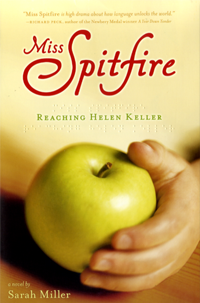
The first week in May has been earmarked Teacher Appreciation Week—to celebrate some of the most important work going on in our society. In preparation for the week, you might want to pick up our book of the day. Perfect for sharing with third through fifth grades, Sarah Miller’s Miss Spitfire: Reaching Helen Keller chronicles the first month in the most recorded teacher-pupil relationship of all time—Annie Sullivan and Helen Keller.
In this remarkable first novel based on material from Sullivan’s letters, readers meet the young Helen Keller. Willful, physically violent, deaf and blind, living in a world without language, Helen fights her young teacher like a wild animal. An orphan who attended the Perkins School for the Blind, Annie writes in a letter, “the greatest problem I shall have to solve is how to discipline and control her without breaking her spirit.”
As readers experience the ensuing battle between these two forces of the universe, they grow to appreciate this young teacher, who fights her own battles with loneliness and longing to be loved. Then, one day, Annie finds a way to break in to the silence of Helen’s world—she stands at the water pump and teaches Helen the signs for “w-a-t-e-r.” In the end Annie proves more stubborn than her charge—the “Miss Spitfire” of the title had been bestowed as a nickname not on Helen but on Annie.
More than anything, the book demonstrates the incredible bond between teacher and pupil. So rather than giving an apple to the teacher in your life, you might want to pick up a copy of Miss Spitfire. Because in the end, all teachers want to accomplish miracles with their students—just as Miss Spitfire did when she arrived at Helen Keller’s home in Alabama in 1887.
Here’s a passage from Miss Spitfire:
I start with obedience.
After dinner I gather a few objects for a lesson and arrange them at the table in front of the window upstairs. In spite of yesterday’s fiasco I’m not willing to give up on regular lessons yet. A schedule–and with it, structure–shall be Helen’s first step towards obedience. Still, I’m going to start small: “doll,” “beads,” and “card” are enough for today. If nothing else, I intend to teach her who’s in charge.
Armed with a bit of cake, I go downstairs to fetch Helen. I find her in the parlor, rocking a much-abused rag doll in little Mildred’s cradle. She moves the cradle with the same fervor she showed the butter churn two mornings ago. If the poor doll had a brain, it’d be addled into cottage cheese by now. Thinking to appease her, I put the hunk of cake into Helen’s right hand and grasp her left one to lead her up the steps.
Gods above! You’d think I’d tried to drag her up by her toes, the way she fusses–clawing, kicking, and finally going limp and dangling by an arm.
“That’s enough of that,” I growl, releasing her hand.
Also recommended:
- Thank You, Mr. Falker by Patricia Polacco
- Because of Mr. Terupt by Rob Buyea
- This is the Teacher by Rhonda Gowler Greene, illustrated by Mike Lester
Additional Information
A few other events for
- Happy birthday Patricia Hooper (A Bundle of Beasts), Don Wood (King Bidgood’s in the Bathtub), Doug Cushman (Aunt Eater Loves a Mystery), Dom Lee (Baseball Saved Us).
- It’s the birth date of Clara Ingram Judson (1879–1960), Abraham Lincoln: Friend of the People.
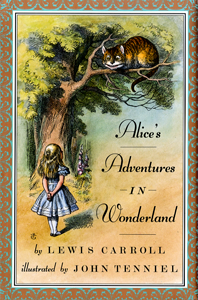
- Alice Pleasance Liddell (1852–1934), Lewis Carroll’s inspiration for Alice in Wonderland, was born on this day. Read The Annotated Alice by Lewis Carroll, edited Martin Gardner, illustrated by John Tenniel.
- It’s the Great American Grump Out, a day to refrain from grousing. Read Gruff the Grump by Steve Smallman, illustrated by Cee Biscoe; Grump by Janet S. Wong, illustrated by John Wallace; The Grump by Mark Ludy; and Axle Annie and the Speed Grump by Robin Pulver, illustrated by Ted Arnold.