
In Luxor, Egypt, on November 4, 1922, the English archaeologist Howard Carter, funded by the wealthy Lord Carnarvon, discovered a pharaoh’s tomb that had not yet been plundered by grave robbers. This tomb contained more than five thousand artifacts of Tutankhamun from Ancient Egypt. For children, King Tut, as he became known, is naturally interesting, because he ascended to the throne when he was a child of eight or nine, and died as a teenager at about nineteen. Also since King Tut’s story is surrounded in mystery, the curious can invent scenarios about what might have happened in his life.
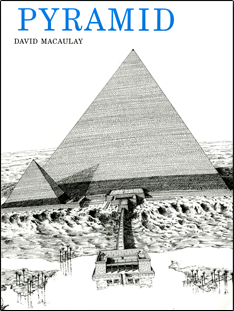
To explore the boy king with the children in your life, I would start with two books—and then extend their reading with those in the Also Recommended section. First, pick up the classic David Macaulay’s Pyramid. Macaulay, certified as a genius by the MacArthur Foundation, excels in explaining to readers ages eight to adult how structures get built. He also shows the society and people who make architecture possible. In this book, readers watch a pyramid rise step by step from the sands of Egypt and observe a mummy being prepared for the tomb. Time magazine once wrote of David Macaulay, “he draws better than any other pen-and-ink illustrator in the world.” But Macaulay also comprehends what young readers need and want to know.
A few years ago National Geographic began publishing children’s books, and they have consistently created high-quality titles, often by people who otherwise might not write for children. Zahi Hawass, Head of Egypt’s Supreme Council of Antiquities, is one such author. In Tutankhamun: The Mystery of the Boy King, Dr. Hawass provides a unique perspective on both the events of the tomb’s discovery and what has been learned in subsequent years. He personally interviewed Sheikh Ali, who worked at the Tut archaeological dig and described the scene: “We sang all the time. My cousin was in charge of transporting the water jars to the site…. On the morning of November 4, 1922, my cousin came with the water and began to dig a hole for the first jar. With his hand, he uncovered the top of a step cut into the rock…he ran back to the tent to tell Carter.” Just that line, “We sang all the time,” changes my vision of the event. I had always imagined the tomb was unearthed with hushed awe. Dr. Hawass also discusses events he has personally witnessed—such as the CT scanning of King Tut. With magnificent full-color images, Tutankhamun: The Mystery of the Boy King brings young readers front and center into the activities of archaeologists today.
So thank you Howard Carter and Sheikh Ali’s cousin. On this November day, you gave us a story that has fascinated the world for almost a century.
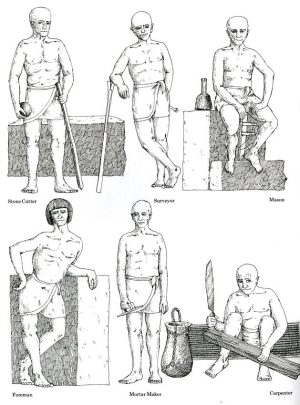
Here’s a page from Pyramid: