

On December 24, 1818, a Christmas carol with a beautiful melody and words of peace—one created by an Austrian priest and a headmaster—was first performed in the Church of St. Nicholas in Oberndorf, Austria. Of all my own childhood memories, the ones of singing this song, known in English as “Silent Night,” remain the most vivid. My German ancestors left the country in 1870, pacifists who did not want to fight for the Kaiser. Although staunch Americans through two World Wars, they spoke their native tongue at home. And so, as a child, I learned from my grandmother the German words for “Stille Nacht” and sang it with her during the holiday season. I thought having a bilingual Grandmother was one of the coolest things in the world.
During a concert in 1984 folksinger John McCutcheon heard a story that seized his imagination. One Christmas Eve during World War I English soldiers in the trenches sang Christmas carols to each other. Then, across the battlefield, Germans soldiers began singing “Stille Nacht,” and both sides joined in, each in their own language. McCutcheon was so taken with this vignette that he wrote a song about it during the intermission of his concert, and “Christmas in the Trenches” became one of the great peace songs of the decade. Sung by an Englishman Thomas Tolliver, the song tells of what happened that Christmas Eve in World War I and ends with the words, “on each side of the rifle we’re the same.”
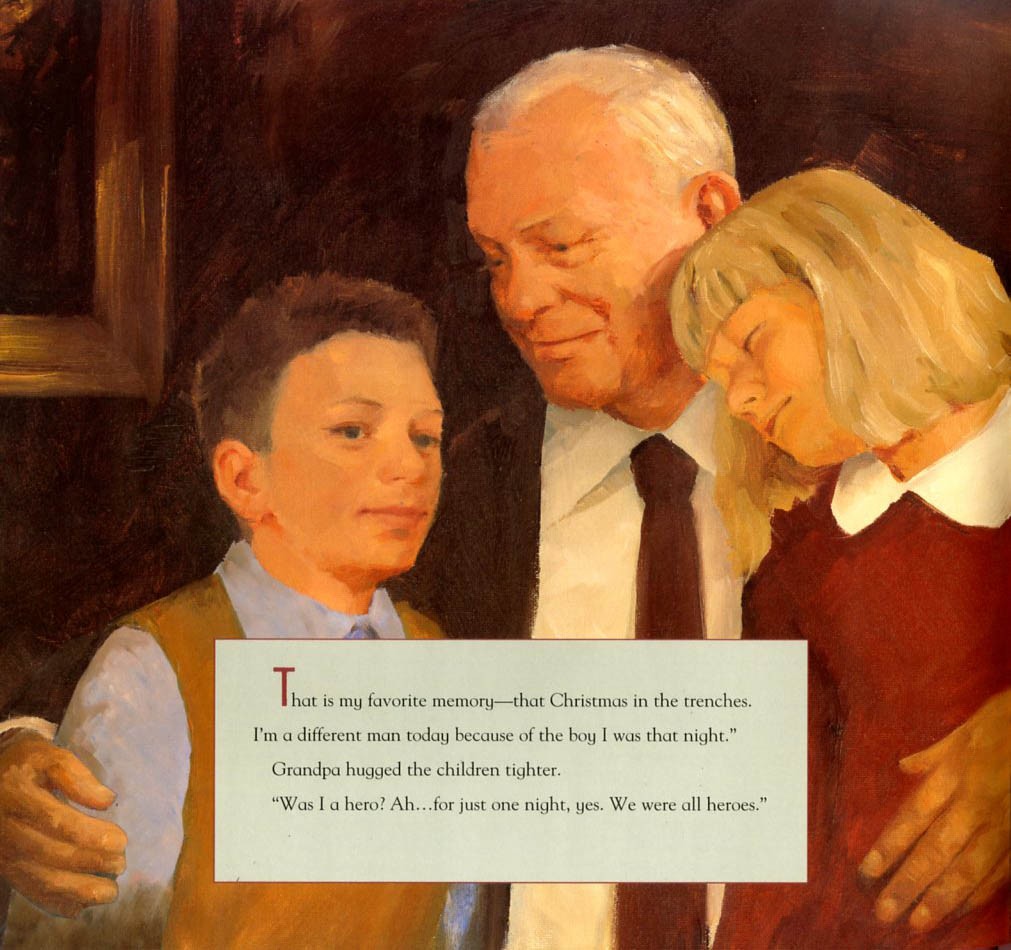
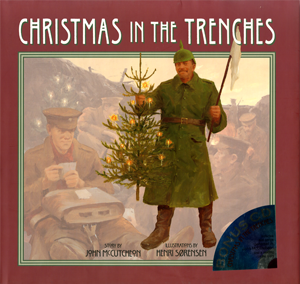
In 2006 Atlanta-based Peachtree Press issued McCutcheon’s retelling for children, Christmas in the Trenches, with art by Henri Sorensen. Retold songs don’t always make the best picture book texts, but this book is an exception to that rule. McCutcheon adds details that children need to the text, and Sorensen provides panoramic views of the battlefield and trenches. As the men wait for war, they hear a German singer strike up a song; soon all join in. After a flag of truce, the men exchange gifts and commodities and then head back to wait for the next day of war. A CD has been enclosed that includes McCutcheon reading the text and performing both “Stille Nacht” and his famous ballad. Together the book and CD bring this small incident of history to life.
For me Christmas Eve will always bring back memories of my dear bilingual grandmother. How I miss her. And how grateful I am for the songs and the books that she gave me—these have stayed with me for more than fifty years.
Here’s a page from Christmas in the Trenches: